How to Travel the World for $346

Nha Trang Beach

No, seriously. I bought 14 flights for $346.

Many people have asked me, “How can you afford to go on such a huge trip???” or “I wish I had the money to travel around the world.” It may sound like a ridiculously expensive and foolish thing to do, but it doesn’t have to be.

How I Can Afford To Travel The World

As recent as a year ago, an around the world trip was something I would never do. World travel fascinated me and I envied those who had done it, but I figured it was just too expensive, too difficult, and not important enough to risk leaving my career. I read about “around the world” tickets, but hadn’t given them any thought until I read Steve Kamb’s post, How to Travel the World for $418. I realized that I already had enough points to buy the same ticket as Steve and if I could double those points, Caroline and I could afford to travel to all the places we’d dreamed about.

Something that seemed so impossible only a year ago, was now not only possible, it was (almost) free! Seeing as money is one of the biggest reasons people don’t travel, this was one of the critical factors that helped us decide to take the trip.

“But Josh, I know you. You had a job which required you to travel for business. You got your travel paid for and were able to keep the points. Not all of us can afford to fly twice a week every week…”

Well, the great thing is, you don’t have to! (You’ll eat a lot less fast food this way too.) I’m going to show you how you can take a trip like ours and travel the world for cheap.

What is Travel Hacking?

Travel hacking, as defined by Chris Guillebeau, is simply, “experiencing the world on a limited budget.” The travel and leisure industry plays up travel (especially international travel) as a luxury only the rich can afford. By using some tips, tricks, and loopholes it’s possible to travel across the world, or all the way around it for very cheap. There are many travel hacking strategies and tons of useful resources on the Internet, some of which I will share at the end of this post.

I’ll show you how I earned my frequent flyer miles and hotel points, with and without actual travel. Then, I’ll take you through the steps to plan your own trip and describe the process for redeeming your miles like I did. Finally, I’ll leave you with the best resources for travel hacking on the web.

Let’s look at the miles I earned from actual travel vs. what I earned by “travel hacking.”:

Miles earned from actual travel:

  • 170,000 AA Miles
  • 120,000 SPG Points
  • 79,000 AMEX Points

Total: 369,000 Points

I took advantage of every promotion, and I earned Platinum status with both AA and SPG. (Which is something you usually have to put your butt in a seat to earn, but not always.)

  • During one promotion, every three stays in an SPG hotel earned you one free resort night anywhere in the world. Each time you check into a different property it counts as a stay. The promotion ran for three months and during that time I switched between 3 SPG hotels every night to maximize my stays. I earned 7 free resort nights, just by booking ahead and packing and unpacking my bag each day. We used the free nights to cover the stay for our Around The World (RTW) Practice Run.
  • Some hotels run a promotion where you can choose to forgo housekeeping in return for a restaurant coupon or points. I lived in filth (not really), and earned 1000 extra points every week.
  • I ensured that I always stayed at the same hotel chain, even if it meant checking the website and calling each hotel twice a day until a room opened up.

I earned plenty of points from business travel, and went through a lot of extra effort to maximize my earnings. Earning all these points only made me want to earn more. I was hooked. I loved seeing the mileage balance increase each week. But after learning about big mileage bonuses with airline credit cards, I earned a ton of miles in a much shorter period of time, without any actual travel.

Miles earned from Travel Hacking:

  • 50,000 AA miles from the Citi AAdvantage Visa
  • 40,000 SPG points from the Starwood Preferred Guest Amex
  • 200,000 BA miles with the Chase British Airways Visa Signature x 2
  • 40,000 US Airways miles with the US Airways Dividend Miles MasterCard
  • 50,000 Chase Ultimate Rewards from the Chase Sapphire Preferred Visa

Total: 380,000 Points

For how much little work went into the travel hacking, it was considerably easier than getting on a plane twice a week for an entire year. All I had to do was fill out a few applications, switch all my daily spending to a certain credit card, meet the minimum spend, and (most importantly) pay off the bill each month. (You must be organized)

DISCLAIMER:

You might be thinking how irresponsible this sounds. “You signed up for 6 new credit cards?” “How deep are you in debt?” You don’t have to sign up for any credit cards to earn miles and fly for cheap. There are many other tactics for travel hacking, which I will write about in the future. However, to earn the greatest amount of points in the shortest amount of time, credit card bonuses are the best way. If you don’t know what you are doing, or don’t have the patience, energy or concentration to keep track of everything, please do not follow my advice. Caroline and I are debt-free with high credit scores, and our scores actually increased after applying for each of these cards. We never carry a balance on any of our cards and never miss a payment. Your credit is a vital asset. Use it responsibly!

Waterfall in Bolaven Plateau, Laos

How You Can Travel For Cheap

It’s possible for you to do the same, by following the steps below:

  1. Set a travel goal
    Where in the world do you want to go? Have you always wanted to visit Angkor Wat in Cambodia, tour Europe, climb Kilimanjaro or surf in Australia? Just pick one place from your list that you’d like to visit.
  2. Figure out who can take you there
    Check out the oneworld route planner, or the star alliance downloadable timetables. These will show you which airlines and flights can take you to your dream destination.
  3. Determine how many miles you need
    Look up the airline’s award chart. This gives you your mileage goal.
  4. Earn and save for the miles
    This is where the travel hacking part comes in and you have to do some legwork of your own. Study or sign up for the travel resources at the bottom of this post for all the information you’ll need. You can earn a bunch of points just by paying your normal monthly expenses on a different credit card.
  5. Go.
    This one shouldn’t need any explanation, but if you need some help there is a certain travel blog I can recommend.
  6. Repeat
    Hopefully you enjoyed it so much that now you’re hooked!
    This doesn’t have to be a one-time thing. You can continue to find new ways to earn miles and take more trips than you ever thought you could afford.

Since I had all my airline miles on American Airlines (AA) and British Airlines (BA), I chose the oneworld alliance to book our RTW trip. Each oneworld airline has their own version of this award, which lets you book a certain number of segments on all the alliance’s partner airlines. Confusingly, AA calls theirs a “OneWorld award”. If you earn miles on another airline be sure to check their rules and regulations.

How to Spend The Miles You Earn

American Airlines OneWorld Awards

This is the fun part, spending those hard-earned miles. I wanted to cover as much ground (or air?) as possible since the tickets were basically free. I started by listing out every country we would ever want to visit. This was a long list and so we had to narrow it down. “This country is too expensive, this country is too far away, we can easily return to this country, etc.” Then, using the oneworld trip planner and route map we plugged in the capital cities of each country and tried to optimize for the greatest number of miles and destinations within the constraints.

The rules are explained in detail in this FlyerTalk thread:

  • You must use at least 2 different oneworld airlines (These include AA, BA, Cathay Pacific, LAN, Qantas, etc.)
  • You are allowed 16 flight segments
  • You may stopover in each city one time, but can connect through the city twice
  • Your itinerary can have one open jaw (arrive at one airport and fly out of another)
  • The distance must be less than a certain number of miles, based on how many miles you used for the tickets. For us, our limit was 35,000 miles, and each ticket cost 140,000 miles
  • You may change the date and time of any segment, but not the routing
  • You still must pay the required taxes and fees on the tickets
  • All flights must be completed within one year of ticketing (not departure!)

The one year rule is especially challenging. You always want to book as far in advance as possible, since airlines have limited award inventory on each flight. I was told on the FlyerTalk forums that I would have a hard time getting the flights I wanted, since I needed to book out flights for an entire year, and the trip couldn’t go beyond one year from the date I booked the tickets. Since I was booking in November for flights in January and February, I was concerned that the first few segments of the trip would already be full. Out of the 14 flight segments we booked, only two of the flights we wanted weren’t available. Since we are flexible, we moved those flights by one day, and were still able to book the exact routing we had planned.

Our final around the world itinerary:

Chicago – Hong Kong – Singapore – Bangkok – Hong Kong – Johannesburg – Madrid – Sao Paolo – Buenos Aires – Santiago – Guayaquil – Galapagos Islands – Quito – Lima

Segments: 14
Distance: 34,499 miles (I tried to squeeze another 500 miles in there somewhere!)

Originally, we were returning to the U.S. via Miami, but after we learned that we could include the Galapagos Islands on the ticket, we decided to use the remaining miles for that and make the whole ticket an open jaw.

Maybe a picture would explain it better?

Around The World Itinerary

I needed 280,000 frequent flier miles (140,000 x 2) to book our itinerary. At the time, I only had 220,000 miles in my AA account. Luckily, SPG allow transfers to most major airline programs, usually on a 1:1 basis. Even better, every 20,000 points transferred earns you a 5,000 point bonus. Since I had plenty of SPG points, I could transfer 40,000 points into 50,000 AA miles, giving me enough to book the tickets!

After getting the miles together, it was time to book, and pay the necessary taxes and fees. British Airways is infamous for high fuel surcharges and fees on award flights. In order to save on fees, I tried to avoid BA if possible. This is easy in Asia and South America, but was quite difficult for Africa, as BA seems to be about the only oneworld carrier that flies between the African and European continents. I managed to find one Iberia route from Johannesburg to Madrid (hence our stopover there) which would then get us to South America. This is the only attempt I made at lowering our fees. I had planned for as much as $1,000 per ticket after hearing about how high the fees on BA can be.

So imagine my surprise when we call for the final booking:

Me: “How much are the taxes and fees for these flights?”

AA Agent: “The total taxes and fees are $346 per ticket.”

Me: (Spits beer across the room.)

This trip takes us across 5 continents, 17 countries and 34,500 miles, and it only cost $346 and 140,000 frequent flyer miles! If you would have told me this a year ago, I wouldn’t have believed you. But I actually did it, and am now traveling around the world for a year on flights that cost less than a month of groceries. I hope you too will be inspired to take the trip you’ve always wanted, and to do it on the cheap. If you have any questions, please leave a comment below, or contact us via twitter or email. Happy travel hacking!

Travel Hacking Resources

I’ve learned everything I know about travel hacking from the sites and books below. I highly recommend them if you are interested in traveling for cheap.

Free

If you are motivated enough to keep up with the new deals, promos and tactics, you can get all the information you need from these free resources:

Premium

If you’re just learning about how to use frequent flyer miles and points, or are overwhelmed by the amount of information from the free resources above, there are some great premium resources that can teach you the ins-and-outs of travel hacking from the beginning. (These are affiliate links. If you buy an item using the links, we get a small commission.)

(A special thank you to Steve for his inspiration, and help via email, or we might not be on this wonderful trip.)

RTW Budget Update: Thailand

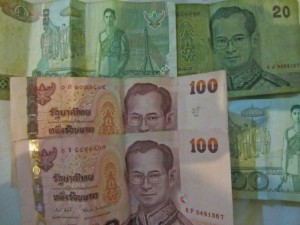
For Thailand, we stayed 26 days and budgeted $45 per day for two people, which was right on target for the type of trip we did. We spent an average of $42.12 per day. (All numbers are total for the two of us, items like visas, fees, activities and food can be split in half to get a per person amount.)

Exchange rate: 30.85 THB = $1 USD

Just about every Thai ATM we used charged a fee of 150 baht ($5). This would have affected our budget had we not had our trusty Schwab Investor Checking account. Instead of paying ridiculous fees, we ended the month with this nice little line on our statement:

ATM Fee Rebate

Boo-yah!

Below, you can see a breakdown of our 3.5 weeks in Thailand by category:

CATEGORY USD ($)
Lodging $418.49
Food $360.11
Misc. $119.55
Transportation $236.26
Activities $33.66
No Visa Required $0.00
Total Spending $1,095.13

Budget Notes:

  • For lodging, we stayed in guesthouses as usual. We ended up with a discount at nearly every place we stayed along with some free nights which really helped keep this low. Again, it’s entirely possible to stay for this budget, we used our discounts to stay in nicer places.
  • Food was disappointingly expensive and generally unauthentic in the Thai islands (Railay, Koh Phi Phi, and Koh Lanta). We were underwhelmed by most of the food we ate there and saddened that each menu also included Western food. Once we got to Bangkok and Chiang Mai, the food was delicious, authentic, and cheap. We spent about the same, but ate probably 3 times as much food as we did in the islands.
  • Misc. included “keep this dirty island clean” bribes entrance fees, a hat and dress for Caroline, new flip-flops for Josh (The Bali ones cut my feet so bad they got infected), band-aids for said feet, laundry, postcards, toilets, bug spray, sunscreen and toiletries.
  • Transportation included two overnight buses (Bangkok – Krabi, Koh Lanta – Bangkok), Taxis in Bangkok, Krabi and Chiang Mai, an overnight train to Chiang Mai and another bus ride from Chiang Mai to Chiang Khong.
  • Activities includes two motorbike rentals and gasoline, and park entrance fees. Our main activities in Thailand were spending time on the beach, walking, eating, working, walking while eating, walking on the beach, walking some more, and then eating. We didn’t have any outlandish “Adventure” spending while in Thailand.
BUDGET SUMMARY USD ($)
Daily Spending $1,095.13
Adventure & Misc Spending $0.00
Total Spending $1,095.13
Daily Average $42
Daily Average (All Included) $42

Considering how long Thailand has been a backpacking destination, it is still very affordable. We were disappointed in how unaffordable the islands were (for our strict budget) but part of that was being there during high season. We had trouble finding necessities like sunscreen, bug spray and shampoo at a reasonable price. In Bangkok and Northern Thailand the food is cheap and unbelievably good and there are many more and better options for budget accommodation. (We paid more for a total dump in Koh Phi Phi than we did for an amazing place in Chiang Mai.) We don’t have to recommend Thailand to anyone because it seems everyone already knows! We can’t wait to return in June.

Budget Travel Tips for Thailand

  • Negotiate for everything, accommodation, transportation, tours, etc. You may not get your price, but it’s worth a shot.
  • Negotiate well, but remember to put it in perspective. The $1-2 you may be trying to save could mean a lot more to the vendor you are negotiating with.
  • Look for guesthouses and food stalls off the beaten bath. You can save a ton of money by walking a few extra steps.
  • Unless your transportation uses a meter, be sure to agree to a price in advance.
  • Spend the money you would use for a tour on a motorbike rental and show yourself around town.

RTW Budget Update: Indonesia


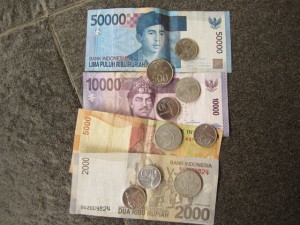
Indonesian Rupiah

Indonesian Rupiah

We stayed 29 days and budgeted $40 per day for two people, which ended up being too low, even though our final average was pretty close. We were able to keep it low mainly by picking our accommodations carefully and eating very cheap. We found one warung in Indonesia that we loved and she served Nasi Campur, our favorite dish in Gili Air, which was only $1.10. Some days we would eat that twice a day and only end up spending $4.40 on food. When we weren’t eating Nasi Campur, we ate Nasi Goreng (fried rice) and Mie Goreng (fried noodles) for pretty much every meal ($2.00 and under), and had breakfast covered at every place we stayed (eggs and toast or pancake and fruit with coffee). We ended up spending an average of $46.31 per day, not including our “Adventures” budget. (All numbers are total for the two of us, items like visas, fees, activities and food can be split in half to get a per person amount.)

Exchange rate: 9,000 IDR = $1 USD

Just for fun, this is what 8 million rupiah looks like...

Below, you can see a breakdown of our 4 weeks in Indonesia by category:

CATEGORY USD ($)
Lodging $654.81
Food $328.91
Misc. $105.37
Transportation $176.10
Activities $31.27
Visa on arrival x 2 $50.00
Total Spending $1,346.76

Budget Notes:

  • For lodging, we stayed in guesthouses. There are many accommodation options in Bali and Gili Air and we could have spent even less if our standards were lower.
  • Food was pretty cheap if you knew where to find it. Most restaurants in Bali were expensive, but if you only ate at warungs, you could eat plenty of good food for cheap.
  • Misc. included flip flops, new shorts for Josh, a book, lots of bug spray and sunscreen, playing cards (how did we leave these at home?), and $30 for the stupid airport departure fee that required Josh to go through security three times since there are no ATMs in Ngurah Rai airport.
  • Transportation included three taxi rides (Kerobokan – Seminyak, Seminyak – Ubud, Kuta – Airport) and our fast boat to Gili Air.
  • Activities does not include our scuba diving in the Gilis which is included in our separate “Adventure” budget shown below:
ADVENTURE USD ($)
Scuba Diving – Open Water Certification x 2 $755.98
Scuba Diving – Adventure Deep Dive x 2 $118.07
Total Adventure Spending $874.04

Indonesia is a country made up of over 17,000 islands, and by going to two we saw less than 1% of them. With that said, based on what we saw, Indonesia is very affordable. There are many mini marts with cheap snacks, water and toiletries compared to other touristy destinations. Accommodation is available at every budget level and Indonesian food is cheap everywhere. If you are traveling on a budget, there are many places in Indonesia where you could stay for awhile. We would have stayed longer if our visa didn’t end!

Planning your RTW Itinerary – Part 2

Now that you have narrowed your dreams to a more realistic list of countries, begin to look at how long you plan to stay in each country. Depending how you travel you may have more or less flexibility on this issue. Since we are traveling on an AA oneworld award, we choose our destinations and then we are able to move around our flight dates and times free of charge as many times as we want. This is one reason we liked the idea of the oneworld ticket because if we could choose to stay in a country longer or leave early and move on quickly.

At this stage a bit more research is necessary. You want to start considering what you plan to do in each country, especially if you have any big excursions that may take a week or two to complete. For example, visiting Peru to hike the Inca Trail will consist of 1-2 days of getting accustomed to the elevation, 4-5 days minimum of the actual Inca Trail hike and an extra 3-4 days to experience Cusco, hike other trails in the area and slow down from the schedule of a tour. Some countries you will plan to stay longer in and simply relax, some you will plan to splurge and upgrade your living arrangements and some you will be in and out of after seeing one or two sights on your way to somewhere else. Begin your travels with an idea, but keep your minds open to new opportunities that come up through people you meet and what locals suggest checking out during your travel.

1. Check the climate in each country for the time you will arrive

Knowing the climate will help not only your packing list but it will help you plan your activiites. Different times of year will be better for different activities. I have never let rain, heat or snow deter me from my traveling plans but I will go in with different expectations. This might also affect how long you plan to stay, or what accommodation you choose to stay in.

2. Research the main tourist attractions that you may want to see or avoid depending on your trip plans

Not everyone wants to climb the Eiffel tower, some travelers consider crowds an inconvenience and tourist attractions overpriced and not a true cultural experience. We enjoy things both on and off the beaten path. So we will usually check out the wonders in each country, but will make a point to eat in local pubs and keep our hostels or bed and breakfast outside of the city hubs. Your list might keep you in Thailand for 2 months but through Singapore or Hong Kong in a few days. Everyone’s RTW trip will be different.

3. Figure out regional transportaion

In Part 1 of planning an RTW trip, you had a basic idea of how you would get around whether it be train, plane or bus. Now you want to start getting a little more specific. If by taking a train overnight to Vietnam from Bangkok will save you $200, then start considering overland transit. Not only will you save money on the flight, but you wont spend money on a hotel for that night. Your budget could be killed with one $900 per person flight to Tanzania if you aren’t planning ahead for that large cost. You might consider changing your itinerary if you know that one flight is more expensive than others. You may even decide to take the more expensive flight due to safety, convenience, or time constraints. It is all about deciding what is worth it to you.

4. Check visas

While you are researching the countries check the entry requirements for each country on your itinerary. Start noting down the costs of each visa, vaccinations needed and any other passport photos or page requirements. This knowledge will help your long term planning and itinerary building.

So you have your list of countries and planned itinerary. Now, how do you go about getting your ticket? Stay tuned to find out!

Read Planning Your RTW Itinerary – Part 1.

Planning Your RTW Itinerary – Part 1

Sitting down to plan your RTW Itinerary is very overwhelming. It is a big world out there and there is so much to experience. There are a couple of things I would suggest considering as you begin to plan your trip.

1. You can not see everything

While traveling for a year you will experience cultures and activities that you could never dream of. If you choose to embark on an African safari, hike the Inca Trail and spend a month in Bali – you can’t be disappointed you didn’t make it to the Great Wall of China or The Great Barrier Reef. Be thankful for the adventures ahead of you and don’t dwell on what you’re not seeing – get back in a year and start planning your RTW 2.0 with everything left on your list. Stretching your travel plans too thin will leave you exhausted and missing important aspects of the culture you are in.

2. Daily cost per living varies greatly between countries

While you are planning your itinerary you have to begin to consider your budget. If you are looking to save money, stay away from Australia/New Zealand, Europe and the USA . If you are dying to see the Louvre, white water raft through the swiss alps, or eat paella in Spain then budget accordingly and keep these countries on your list. There are plenty of RTW travelers who have posted their budgets online for everyone to see. Check these out while planning your trip.

3. How purchase your tickets and choose modes of transportation while traveling

We are blessed with a bank of oneworld points, thanks to Josh’s past year of business travel. We are able to buy 2 oneworld RTW tickets on our points, which will save a lot on our overall budget. The oneworld ticket has a lot of rules and regulations which we will go into more in another post, it has its pros and cons – but overall this is the best option for us.

You might choose to buy your bigger tickets separately and then once you get to a country travel overland via trains and buses. There are plenty of options available, but researching the ease of transportation and considering alternative modes of transport will help you plan.

4. Budget vs. luxury travel

Budget travel can get rough, but luxury travel may prevent you from truly seeing the culture of the country. I had a close friend visit Costa Rica who never had to speak any Spanish, while Josh and I came across many people who didn’t speak any English at all simply because of the different choices in where we stayed and how we traveled.

Now it’s time to begin. Before you research every country and get into the specifics and whirlwind of all the information available online, I suggest sitting down with a pen and paper and simply dreaming. Write down every destination (Bali) or adventure (hiking the Inca Trail) or food (curry in Thailand) that you have ever wanted to experience. Consider who you know living around the world and who you can visit. Use movies as inspiration to see beautiful scenery or remember back to friends’ stories of their own travel adventures. This will start your mind reeling with ideas for your own adventure.

Next, use your list and figure out a realistic route to hit each country. It is easy to plan 6 months in SE Asia and visit Thailand, Bali, Vietnam and more all by train and short flights. On the other hand making it to Australia might be more difficult to fit into the schedule. Remember rule number 1: You can’t see everything! This won’t be your last travel experience so pace yourself and enjoy each country while you are there instead of thinking about where you are going next. Focus on the countries you absolutely want to see and skip those that are out of your budget, or too hard to get to.

Once you have finished narrowing down your list keep reading Planning Your RTW Itinerary – Part 2.


Help! Pre-Planning – Hong Kong

In an attempt to organize our pre planning and to focus the millions of things we want to do in the next 5 months, we have decided to focus on one city we will visit per week. Our week will consist of researching the transportation, accommodations and all around expectations of our upcoming travels.

We are looking for help and in return we will publish all of our week worth of research on where to stay, what to do and how to backpack through Hong Kong on a budget.

Leave a comment or send us tips you have on:

  • What area to stay in
  • Budget travel tips
  • Transportation
  • Hostels/Couchsurfing
  • Food of all types!
  • Must do adventures
  • Tourist scams to avoid
  • Day trips from Hong Kong

We will absolutely credit you and send the love back for helping us out!

Image credit: moleskine